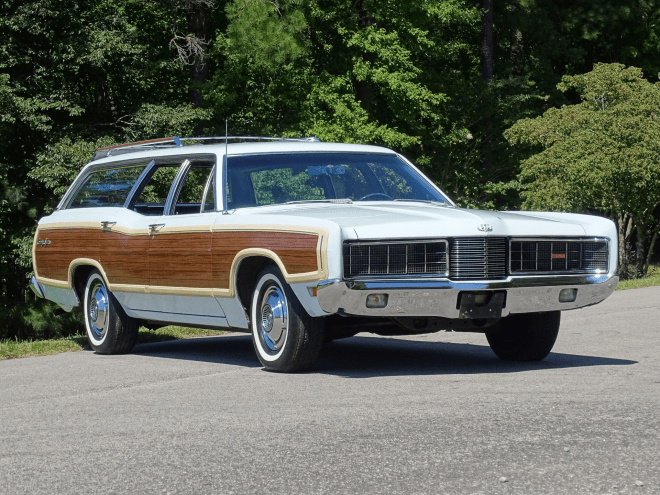
Greg Brown has a song titled Late Night Radio about remembering being a kid in the “way back” of a station wagon in a little nest built by mom and dad as they travel cross country in the dark of the night. It’s nostalgia for a simpler time when it was just the family floating along in a dark car across the plains of Kansas picking up AM radio stations from as far away as Texas. I remember those long drives in that massive station wagon.
I get it. Nostalgia for simpler times is very appealing. It’s also deceiving, but I get it. Often I want life without instant access to information, onslaught of news, any song or TV show I want, GPS maps…until I do of course. But I do get it. When I owned a collection of a couple dozen albums, it was much easier to pick what album (yes actual whole album) to listen to. Simplified can be nice…until it isn’t. This is the power of nostalgic stories, like of simpler times riding in the way back of the car in a little nest.
When I buy ice-cream and have it in the house I eat it. So I don’t buy it. I know my weaknesses…until I don’t. What am I trying to say? I don’t know, except acknowledging that the world seems to move faster and with more complexity each day with each advancement to make our lives easier…until they don’t. And we can have agency over how we participate in that pace. How we relive old stories and add new ones.
I’m releasing an album at the end of the month I’m labeling as a “musical novella.” Ten songs and narrative storytelling about Danny and Katie growing up and falling in love in a small town. It’s called This Town. I’m doing a one-man show as well telling the stories and singing the songs September 28. It’s set in a time before cell phones, lockdown drills, banned books, and rizz, whatever that is. Why? Because I wanted to spend some time that space for a bit. Was it a better time? Was I happier then? Nope. But the pull of nostalgia is very strong. Just like ice cream.
Story is important. It’s how we transmit cultural norms, even if they might include false narratives.
In this country and much of the world, we all swim in (or against) white culture rooted in a story of European colonizing Christian settlers. As humans we look for our place, our sense of responsibility. I was reading in a book by Kaitlin Curtice this week where she is writing about the role of Potawatomi women as protectors of water, and the responsibility for not just caring for their children, but water, other species, with foresight into the lives of future generations. What is equivalent to this sense of role and responsibility in white culture? Reading her story got me reflecting on mine. This is the power of listening to other’s stories.
Men are breadwinners for one’s family and women are caregivers for one’s family. These are traditional roles to which the architects of Project 2025 and the angry, yelling voices of the “mano-sphere” are trying to bring us back to. It’s rooted in nostalgic stories. They are like ice cream—taste good, but they melt if left out too long.
In traditional white culture men make money to provide for their family to get ahead, win the race against others (and the ecosystem) while women care for their own children. It seems to me the traditional white culture roles begin and end with advancing and improving the status, comfort, and wealth of immediate family, sometimes only the current generation with no thought of impact on the next, instead of extending concepts of family to other outside our group, other species, the ecosystems we live in as well. It is very much a story enacting individualism over collectivism.
White Colonizing Christianity uses their understanding of God to create hierarchy, division, and suffering, still enacting manifest destiny. Oof. That’s a harsh reality, but it doesn’t have to be the story we enact. There are other stories, other cultural norms with different creation stories, different mythologies, deeper ecological knowledge that can provide guidance in rewriting our own stories. It’s hard work though, and nostalgic stories are appealing and easy and reassuring.
So, what am I trying to say? I’m still trying to figure it out. But I appreciate you hanging in here until the end.
Story is important, be they grand stories of creation or stories of kids riding in the back of a 1970 Ford Country Squire with the backwards facing seat making the kids carsick. Today I won’t buy ice cream…until I don’t not do so I guess.
 Tim Goodwin